Pacific Northwest Roadtrip -4
Summer 2026
Native Flora Images
The images are best experienced on a computer monitor.
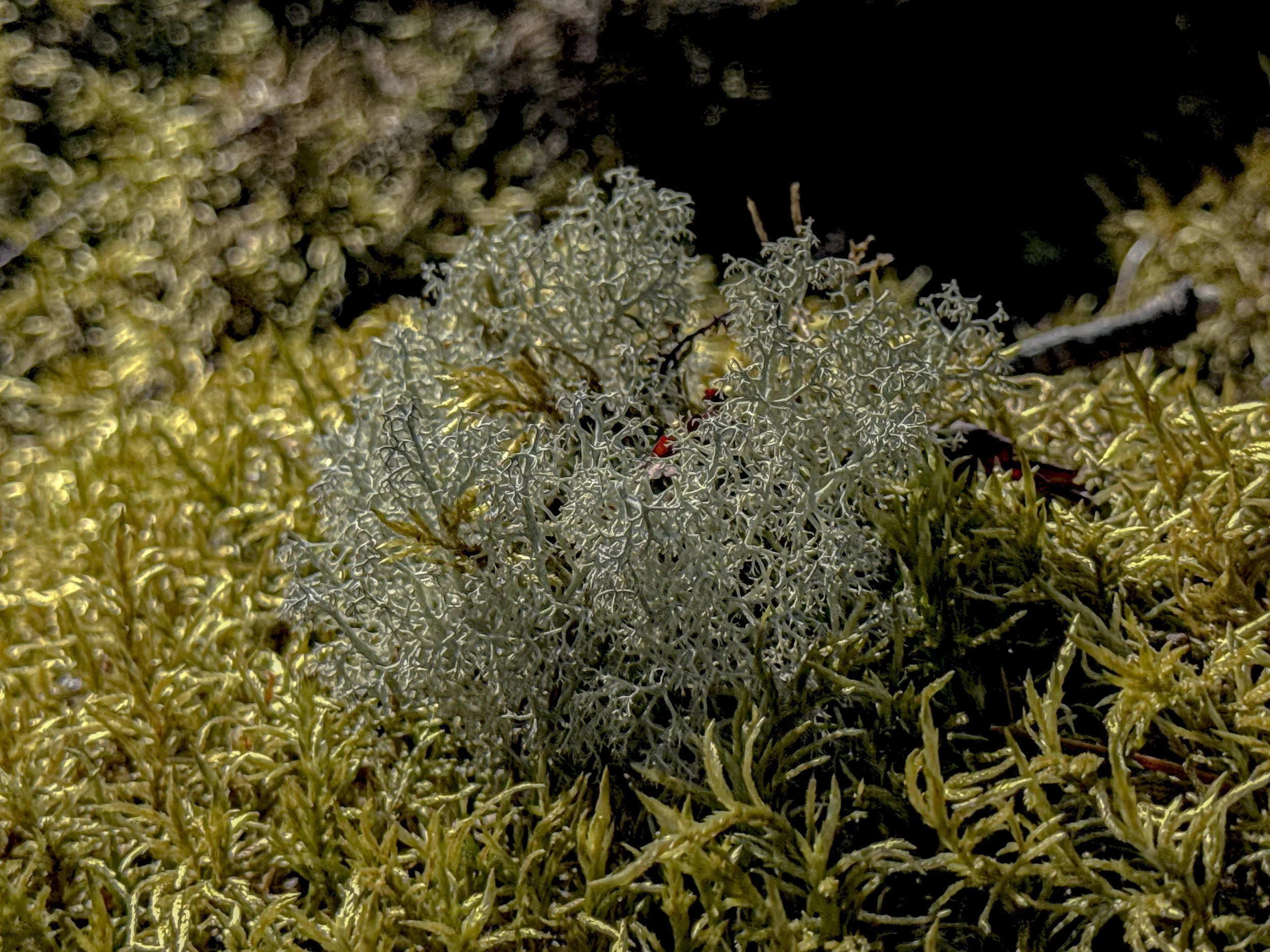
Reindeer Lichen (Cladonia rangiferina) on a mat of Sphagnum Moss
British Columbia- being so far north of California- has introduced me to a number of new flora, including reindeer lichen and sundews and the more I learn about these the more intrigued I become. Walking in Francis Point Provincial park- up above the small coastal town of Gibson- I first encountered the odd looking reindeer lichen. All lichen is a hybrid colony of algae and fungus. This is known as symbiosis or mutualism. This lichen looked nothing like the lichen I know that lives on rocks, is small and flaky, and can be a variety of bright colors. This lichen branches out and can resemble small shrubs. This organism is extremely fragile and it only grows between ⅛ and ⅜ of an inch per year! It can take decades to recover from disturbances.
This lichen can survive in some of the most extreme environments on Earth and it provides supplemental nutrition to deer and other foragers in the middle of winter. Native peoples have used it medicinally for kidney stones, diarrhea, and other ailments. They also boiled it and mixed it with other foods.
You may have seen this lichen used as miniature trees in model railroad exhibits.
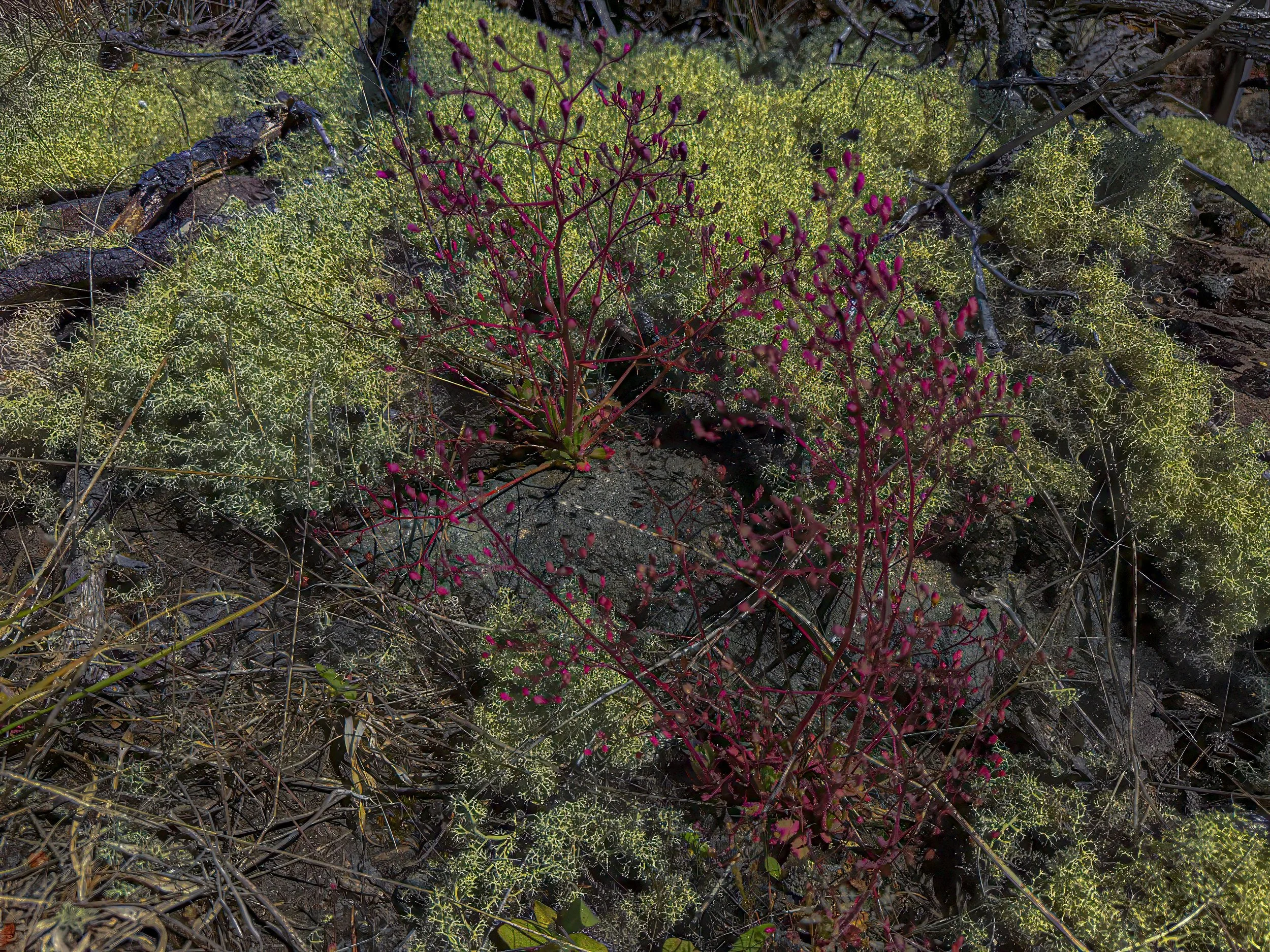
Sundew (Drosera rotundifolia) and Reindeer Lichen (Cladonia rangiferina)
In the last post, I shared about how the bladderwort plant evolved to be carnivorous and how it works together with the yellow pond lily to help create healthy environments for a variety of freshwater life. The red plant in this image, set among large groups of reindeer lichen, is also carnivorous. The plant produces a sticky substance on the leaves that traps small insects providing supplemental nutrition. This variety- Drosera rotundifolia- has small round leaves and is found in wet coastal bogs. Some parts of the Sunshine Coast and Vancouver Island are great places to discover these special plants. I was surprised to learn how many carnivorous plants there are on our planet.
If we take the time to slow down as we walk out in nature and to just be curious, there are so many fascinating things we can see and learn more about with just a little effort.
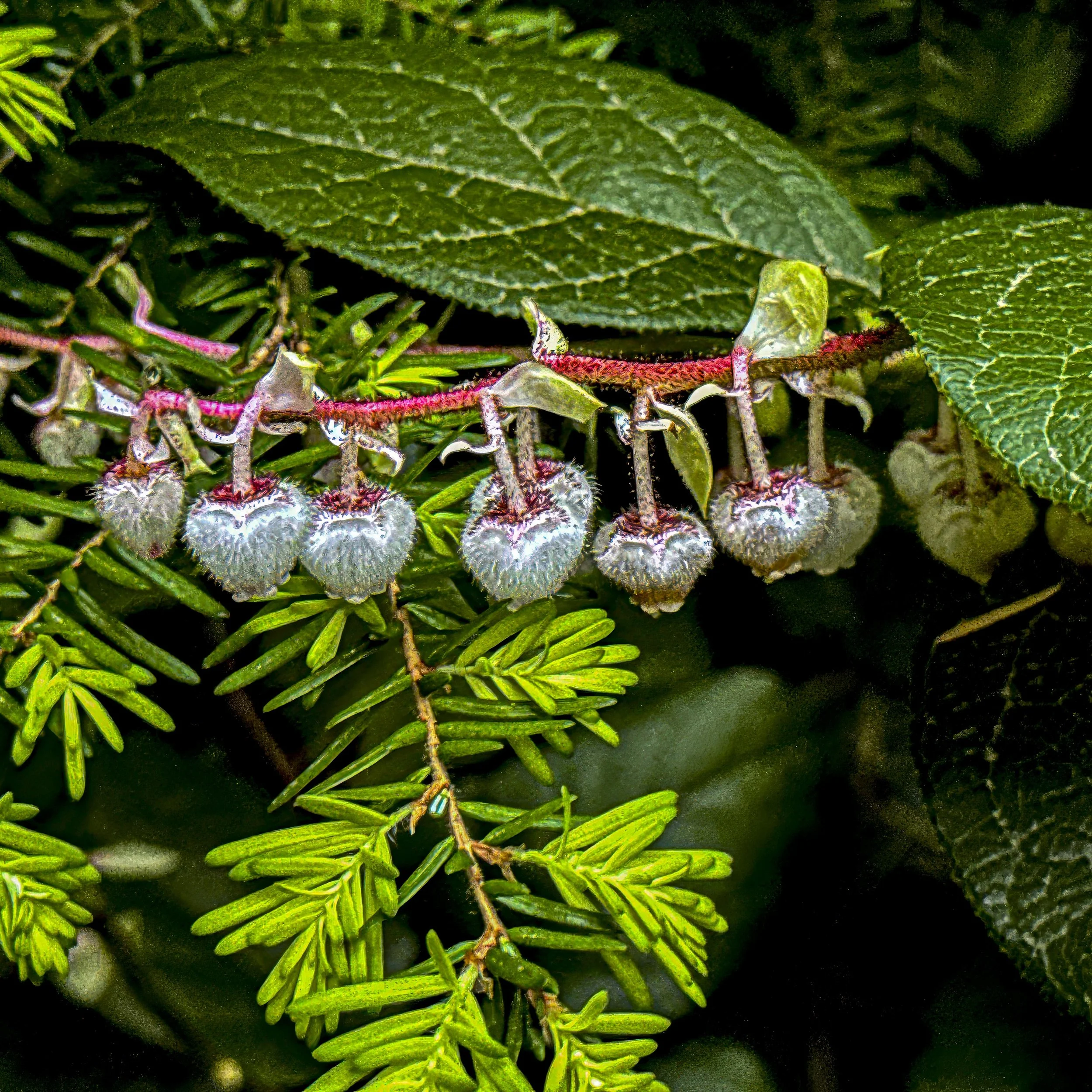
Salal Berries
Additional Content-