Pacific Northwest Roadtrip -2
Summer 2026
Native Flora Images
An Introduction To My Work
The images are best experienced on a computer monitor.
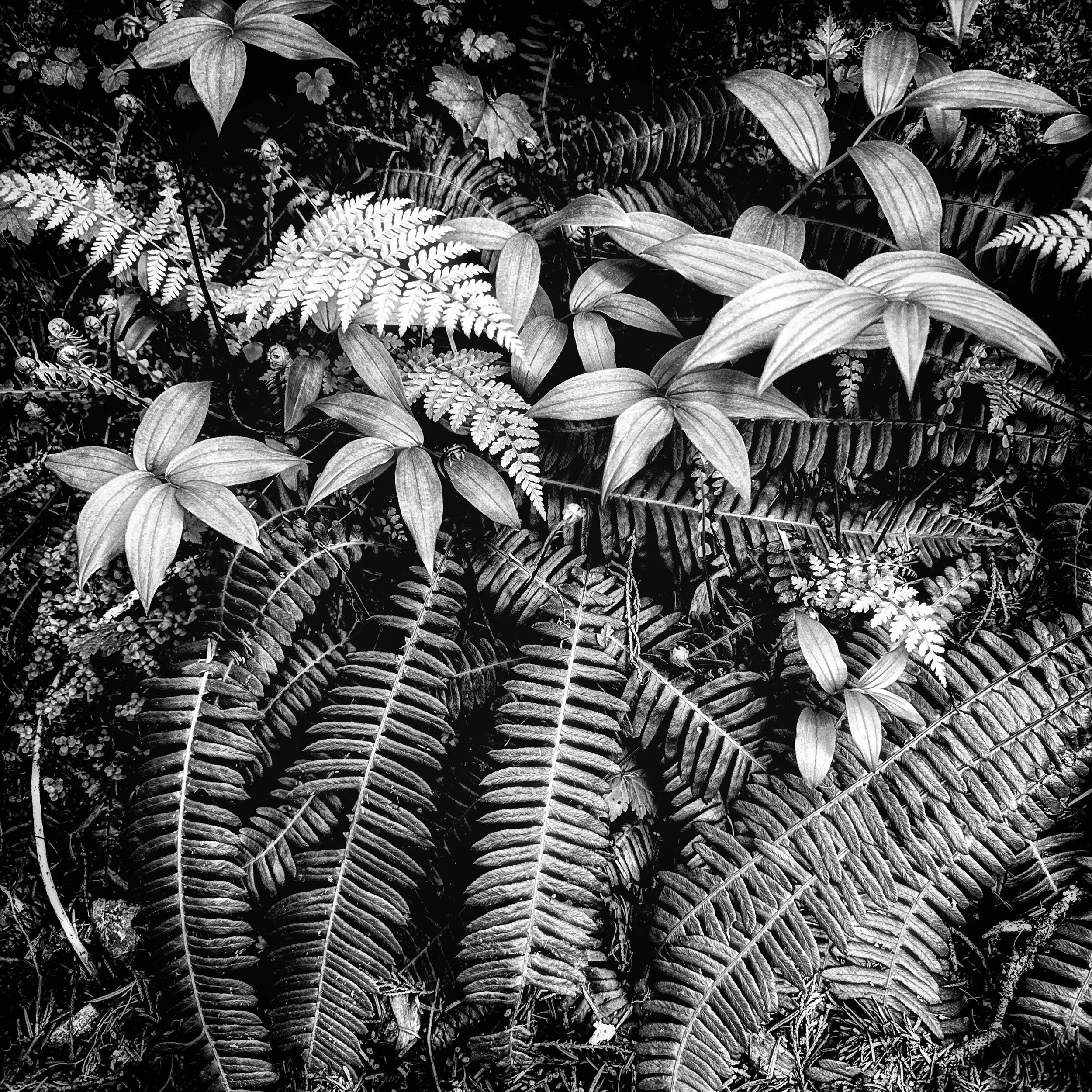
Western Sword Fern (Polystichum munitum), False Solomon’s Seal (Maianthemum racemosum), Bracken Fern (Pteridium aquilinum)
The Western Sword Fern (Polystichum munitum) is a very common native fern where I live along the central coast of California. When I began a journey of reintroducing native plants to our property I removed a lot of ivy, vinca, poison oak, and blackberries (mostly non-natives from the Himalayas). What was left was a native oak forest with a handful of understory plants, including the Western Sword Fern. Over the years, I have added many more to the property. If you live in the western United States near the coast or up in the hills I highly recommend that you use this in your landscaping projects.
Since this fern is so common and widespread, native peoples of course found if useful. The large dried fronds were used as bedding and flooring, as a protective lining for baskets and steaming-pits, and when food was scarce the root was roasted and eaten.
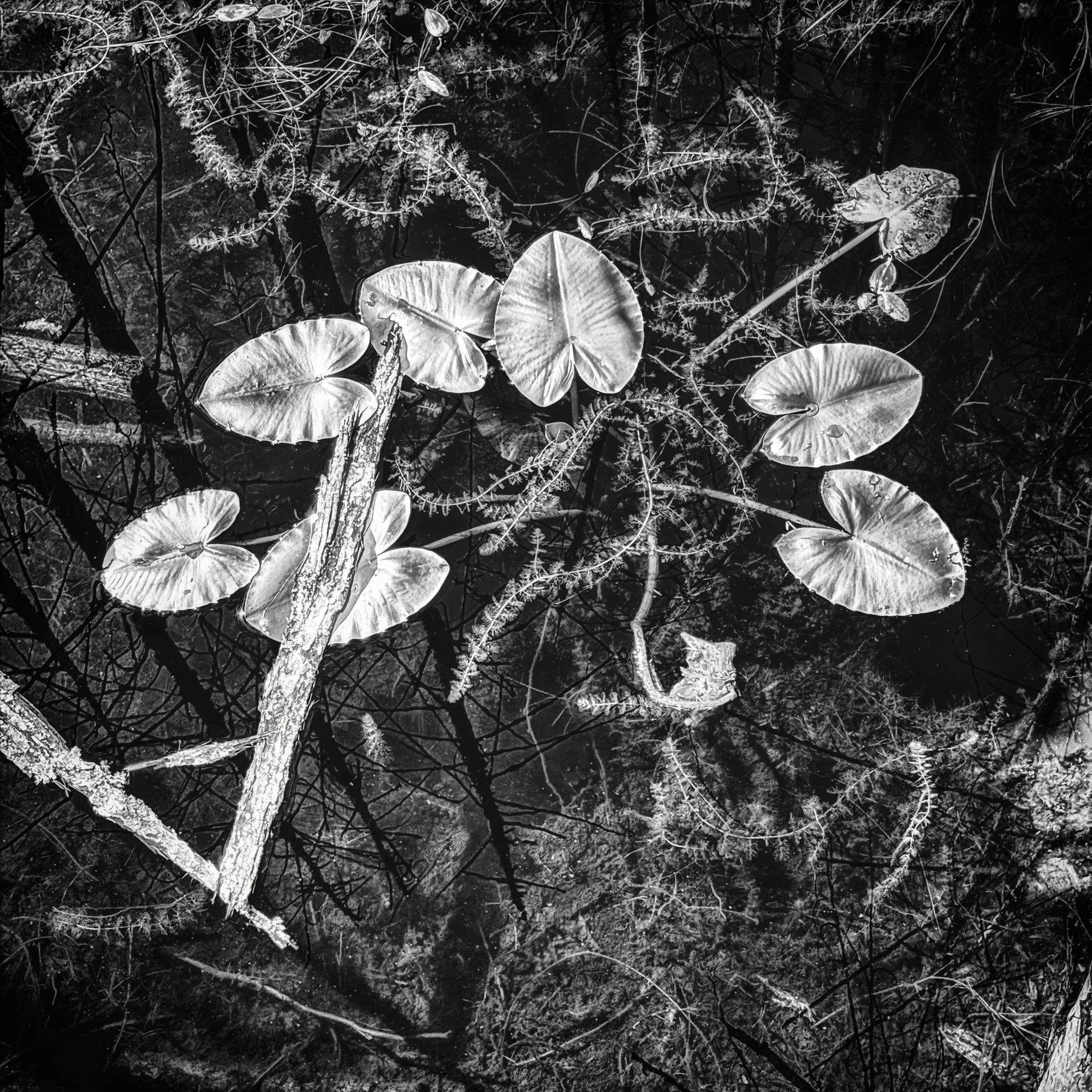
Yellow Pond Lily (Nuphar polysepala), and likely Common Bladderwort (Utricularia macrorhiza)
This is one of my favorite images from this trip. The depth and complexity quickly draw me into the composition. The Yellow Pond Lily rests on the surface at the edge of a wetland, the feathery foliage- likely Common Bladderwort- dances just under the surface, and the dark shadows of bare trees pulls you deeper down. This is one of those images that is striking in black and white and in color. The two versions are so different and carry dissimilar emotions. It is somewhat rare for this to happen. Usually, an image leans strongly into the two-toned world, or the world of color. Take a look for yourself. What are your thoughts? Reactions? Preferences?
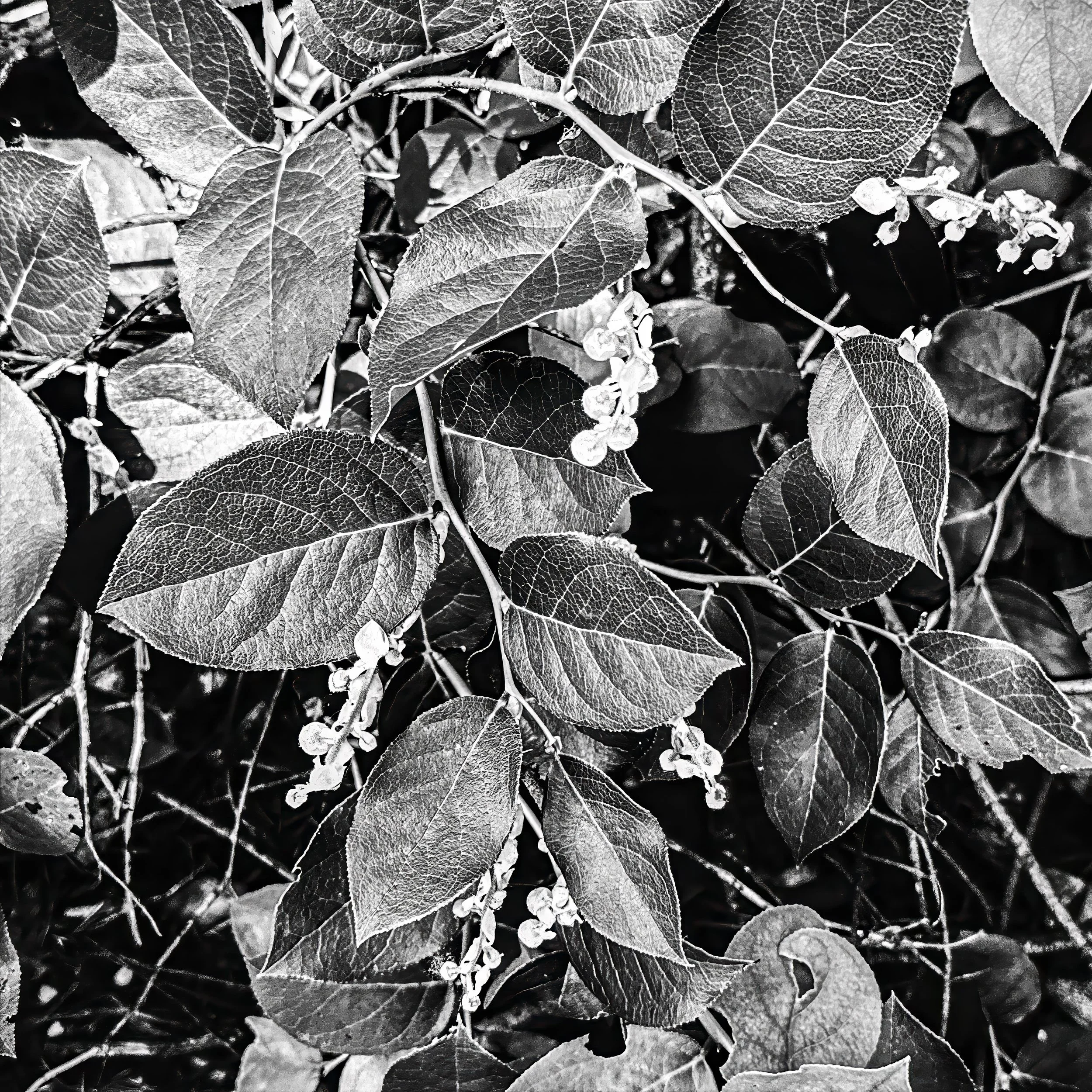
Salal (Gaultheria shallon)
Salal- Gaultheria shallon- is an evergreen shrub in the heather family. It grows between a foot and a half and ten feet tall. It’s leaves are serrated and leathery. Each berry contains about 126 tiny brown seeds which are an important winter food source for several animals which include deer, beaver, little wrentits, big bears, chipmunks and grouse. Native peoples also consume the berries. The plants can survive moderate fires and grow back from their rhizomes. The berries and leaves have medicinal value. Facts gathered in Wikipedia.
This very common plant has been in North America for tens of millions of years. Over thousands of years native peoples grew knowledgeable about this species and many, many more. They were part of nature and lived in balance with the plants and animals around them. Their vast knowledge of their environment was handed down through time.
Often, I wonder how our world would be different if the early European explorers and colonists had arrived with an openness to learn from native people, to have the capacity to set their world view aside, to be humble enough and curious enough to see the wonder and opportunity before them. There were of course scientific explorers who were curious and awe-struck at the variety of flora and fauna they encountered. Still, most of these European educated scholars did not see the natural world through the lens of the sacred, but more often as commodities.
This genus, Gaultheria, is named after a french physician and botanist by the name of Jean Francois Gaulthier (1708-1756).
I do ponder a different history. A ridiculously absurd story, where the people from such different worlds were able to bridge their radically different world views- realizing they were in fact lost brothers- and with deep respect and openness learn from each other and find a way forward together.
I